The dashboard
See what's headed their way, not just yours.
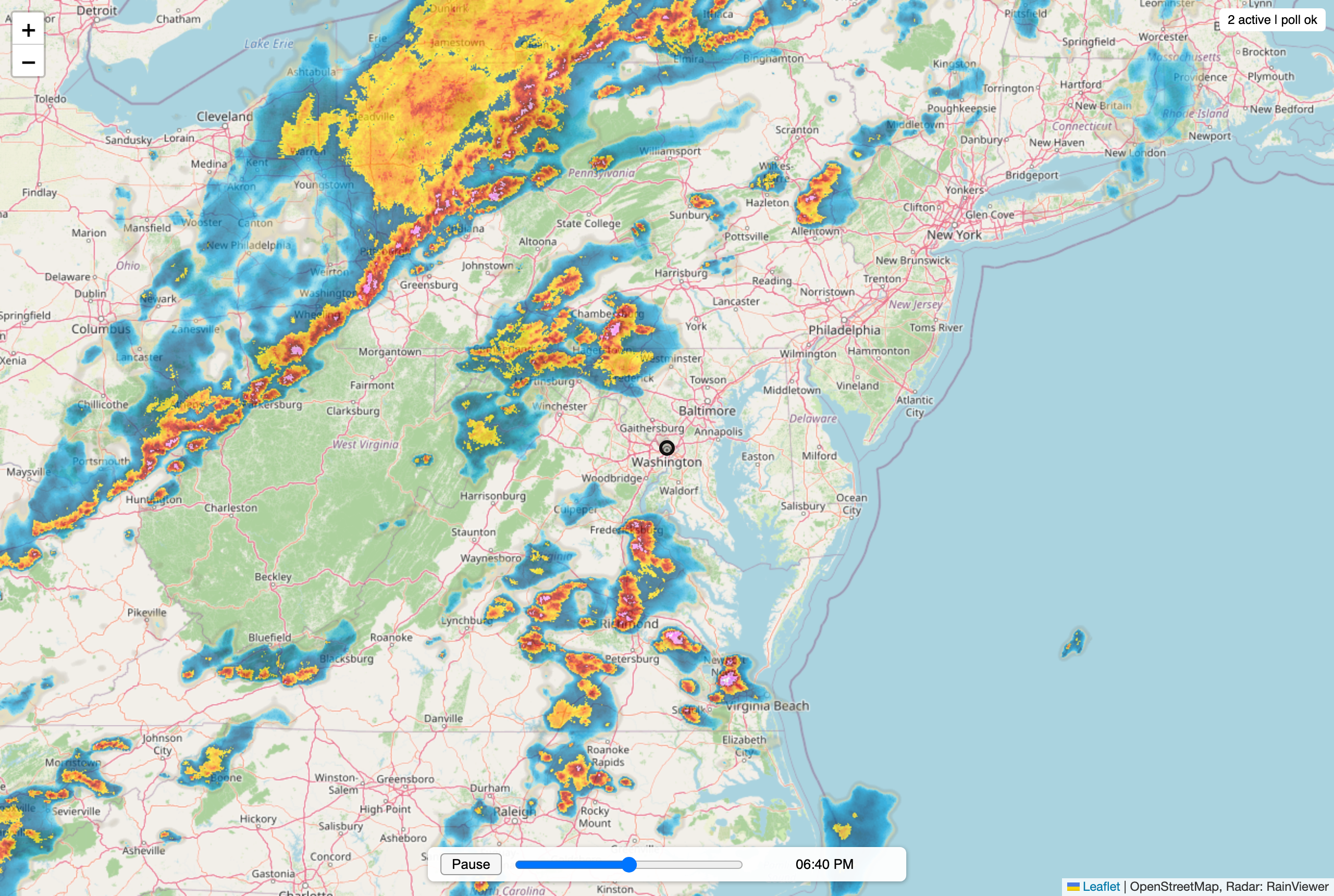
Live NEXRAD reflectivity, about two hours of animated loop, and active NWS warning polygons, centered on the address you're watching.
Stormward watches their address for tornadoes, floods, and evacuation orders. When one hits, it emails them and asks them to tap "I'm safe." If they don't answer within fifteen minutes, it alerts you.
Actual timings. Stormward checks the National Weather Service every 30 seconds, at 5 P.M. or 5 A.M.
Why Stormward
A warning hits their county at 3 in the morning. You're asleep, two states away. The weather app on their phone fires one notification and moves on, and you have no way to know whether they saw it, slept through it, or are fine and never thought to mention it. Calling to find out means waking them for nothing, most nights.
Stormward asks them for you. When a dangerous warning covers their address, they get an email with one button. If they tap it, you hear nothing, which is the point. If they don't, you and your emergency contacts are told, with their address and a map pin.
SOURCE: api.weather.gov (public NWS) · RADAR: NEXRAD reflectivity
The warning in plain language and one button to confirm they're safe. No account, nothing to install.
One invite text they confirm with a reply of YES. After that, a dangerous warning reaches their phone directly, not just their inbox. Pro. Built, switching on shortly.
If they don't answer, a push that buzzes your phone with the app closed, plus your emergency contacts.
An automated call for the people who don't answer a text either. Not yet built.
The dashboard
Live NEXRAD reflectivity, about two hours of animated loop, and active NWS warning polygons, centered on the address you're watching.
What you get
Free covers one loved one, the full escalation ladder and the live radar: they are asked, and you are told if they don't answer. Pro adds the part where other people are asked to physically go check, plus up to five loved ones. Founding members pay $18/year and stay at that price while their subscription is active.
The warning goes to them with one button. Confirming takes a second, needs no account, and stops the ladder.
Fifteen minutes of silence and the people you nominate are emailed too, with their address and a map pin, so someone can go check in person.
If the person you're watching has no email on file, there's nothing to wait for. You're alerted the moment the warning lands.
Tornadoes and floods, but also evacuation orders, shelter-in-place, hazmat, and civil emergencies the National Weather Service relays.
Choose which events escalate and which just log, tornado warning down to special statement.
About two hours of NEXRAD frames with play, pause, and scrub, centered on the address you're watching.
A parent, an in-law, a kid at college, the cabin. Each with their own address and their own ladder.
Built and tested, switching on shortly. They confirm one invite text with YES, and after that a dangerous warning texts their phone directly. Pro, at no extra charge. How consent works.
If the monitor itself stalls, its health check catches it and restarts it. Silence should never mean "all clear."
Watching yourself?
Add your own address and your own email. The warning comes to you with the "I'm safe" button, and if you don't tap it, your emergency contacts are told where to check. People who live alone tend to set it up this way.
Pricing
Free to start. Pro is $18/year, secure checkout by Stripe inside the app.
Questions
No. They get an email with one button in it. Tapping it tells Stormward they're safe and stops the ladder. There's no app, no account, and no password for them to keep track of. The only person who signs in is you.
Leave their email off, and Stormward alerts you the moment a warning covers their address instead of waiting on a channel they don't read. On Pro, you can also invite them by text: they get one message and confirm with YES, and from then on a dangerous warning texts their phone directly. A phone call, for the few who don't answer a text either, is next on the roadmap.
Yes. Adding their number sends one invite text, and nothing else goes to their phone until they reply YES. They can reply STOP at any time and it takes effect immediately. Only their phone can undo a STOP; nobody else can text them back into it.
Then you get told, which is the safe failure. Stormward can't tell "they're fine and busy" from "they're in the basement," so it treats silence as worth a phone call from you. Fifteen minutes after the warning, you and your emergency contacts get their address and a map pin. That gap is deliberate: long enough that being in the shower doesn't summon your sister, short enough to matter.
No. Stormward watches a fixed address that you enter, and nothing else. There's no app on their phone, no GPS, no live location, and no way for it to tell where they actually are. If they're out to dinner during a warning at their house, Stormward still asks, and they still answer.
Not just weather. The National Weather Service feed carries all-hazards emergencies: tornadoes, flash floods, and hurricanes, but also evacuations, shelter-in-place, hazmat and radiological warnings, and civil danger and law-enforcement warnings. Stormward escalates the life-threatening ones until someone answers. Civil coverage depends on local authorities relaying to the national system, so it's broad but not guaranteed everywhere.
Free covers one loved one, the full escalation ladder, and the live radar, with no card: they get asked, and you get told if they don't answer. Pro ($18/year) adds emergency contacts, the layer where other people you nominate are asked to physically check on them, plus up to five loved ones. Text alerts are built and switching on shortly; phone-call rungs are still on the roadmap. Nobody's alerts are held back on the free tier; what's paid is getting a human involved.
Cancel anytime from inside the app. If something isn't right, reply to your Stripe receipt and we'll make it right. We'd rather refund you than keep money for something that didn't work for you.
No. Stormward relays alerts from the National Weather Service and is a convenience layer, not a replacement for official sources. Anyone relying on it should still keep a NOAA Weather Radio or local emergency channels for life-safety decisions.
Alerts come straight from the National Weather Service public API (api.weather.gov), which carries all-hazards CAP alerts relayed from FEMA IPAWS and local authorities, not just weather. Radar is NEXRAD reflectivity. Stormward runs entirely on public, authoritative government data.